Assessing lanyards for event reuse
Before you decide to redistribute lanyards at your next conference, you need to evaluate their overall condition and structural integrity. A careful visual inspection helps your team separate durable items from those that show significant wear from continuous handling. You should check the fabric ribbon for frayed edges, ensure the stitching remains tight, and confirm that the material has not become stiff from environmental exposure. Establishing a strict quality standard ensures you only provide attendees with reliable equipment that keeps their identification visible and secure.
Cleaning and inspecting your lanyards
After a busy event concludes, your lanyards often collect dirt, sweat, and minor damage that require attention before they return to storage. Setting up a structured maintenance process allows your team to restore the straps and verify that all mechanical parts still function correctly. You must treat the fabric strap, the metal or plastic attachment, and the safety component as individual parts during this review.
Washing fabric straps
You can safely clean synthetic materials like polyester and nylon by hand using lukewarm water, a mild soap, and a soft toothbrush. You should remove any detachable metal clips or plastic badge holders first to protect both the hardware and the fabric weave. Scrubbing the strap gently lifts surface dirt and oils without fraying the fibers, while a thorough rinse under cool water removes all soap residue. If you prefer to machine wash the straps, place them in a protective mesh laundry bag and run a cold delicate cycle with mild liquid detergent. You must always air-dry the lanyards flat on a clean towel, because extreme heat from a tumble dryer will melt or warp the synthetic fibers.
Checking hooks and clips
Metal swivel hooks and lobster claws require a detailed manual check to prevent unexpected mechanical failure during your next event. You should examine the surface for deep scratches, severe pitting, or rust that reduces the weight capacity of the attachment. Your team must also test the internal spring by opening and closing the gate to ensure it snaps back shut quickly and completely. You should permanently discard any hook that is visibly bent, shows hairline cracks, or features a swivel base that catches and grinds when rotated.
Testing safety breakaways
A safety breakaway is a plastic connection designed to pull apart when the lanyard catches on a solid object. Over multiple uses and repeated snapping cycles, the plastic prongs inside this connection can stretch, warp, or lose their required friction. You need to pull the breakaway apart manually and snap it back together to ensure the connection still holds firmly under normal wear. If the clasp pops apart under minimal weight or fails to click securely into place, you must replace the entire lanyard to maintain proper function.
Managing event specific branding and dates
Lanyards printed with specific years, prominent sponsor logos, or outdated conference themes present a distinct challenge for long-term reuse. When your team evaluates these printed straps, you must decide if the older branding will confuse new attendees or misrepresent your current event sponsors. A lanyard featuring a generic corporate logo or a simple continuous color pattern transitions easily between different functions without requiring explanation. You save valuable budget by prioritizing these timeless designs during your initial procurement process.
If you already possess a large stock of dated lanyards, you might consider using them for internal staff training days where outward marketing matters less. Distributing outdated sponsor branding to public visitors can create friction with current partners who expect exclusive visibility. Segregating your inventory into generic reusable stock and event-specific items gives your administrative team clear guidelines for what they can distribute. This straightforward sorting process protects your professional image while maximizing the useful life of your existing supplies.
Steps for storing lanyards to prevent damage
Packing your lanyards correctly after cleaning and inspection prevents the straps from tangling and protects printed designs from peeling over time. An organized storage approach saves your venue managers significant time and prevents unnecessary inventory loss before the next conference. You can follow a sequential process to keep your supplies in excellent condition while they sit in storage.
- Sorting by category: You should separate the lanyards by material, width, and attachment type before packing them into boxes. Grouping identical items together makes it much easier to count your inventory and distribute the correct equipment at your next gathering. This step ensures that visitors, speakers, and staff receive the exact setup they require.
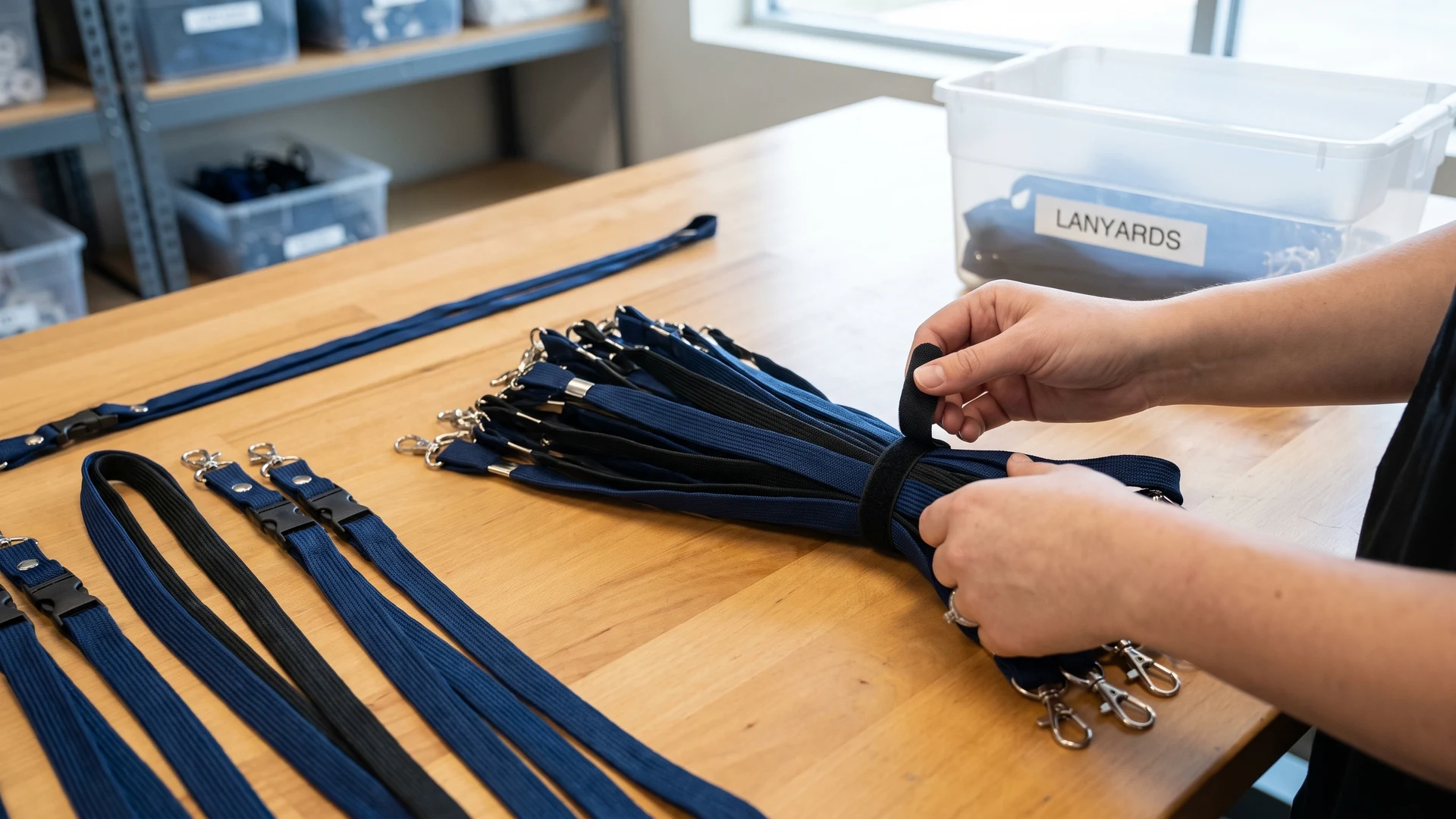
- Preventing strap tangles: Your team should lay the lanyards flat in bundles of ten or twenty and secure them loosely with a soft fabric tie. Avoiding tight rubber bands prevents permanent creases in the fabric and stops the metal attachments from knotting together. Neatly bundled straps emerge from storage ready to hand straight to your attendees.
- Protecting printed designs: You must store printed lanyards away from direct sunlight and extreme temperature fluctuations to prevent the ink from fading or cracking. Placing the bundles in opaque, breathable storage bins maintains a stable environment for the fabric and the printed graphics. A cool and dry storage room stops synthetic materials from becoming brittle over the winter months.
- Labeling the containers: You need to clearly mark the outside of each storage box with the exact quantity, material, and attachment style inside. Detailed labeling allows your staff to locate the correct lanyards instantly without unpacking multiple boxes and disrupting the organized bundles. This administrative detail streamlines your setup process on the morning of a major event.
Can you machine-wash conference lanyards, or is hand-washing safer?
Hand-washing is safest for most polyester or nylon straps you plan to reuse. Remove attachments, then clean with cool water and mild soap using a soft brush. If you machine-wash, place your lanyards in a mesh bag and use a cold gentle cycle. Air-dry in shade. Never use heat.
How do you remove stubborn stains without damaging printed designs?
Start with a pre-rinse, then dab a little mild dish soap on the mark and brush gently. Rinse with cool water and repeat if you need to. Avoid bleach, fabric softener, hot water, and strong solvents. Limit scrubbing on printed areas to prevent dulling the design.
How do you check hooks and clips are safe to reuse?
Check for bends, cracks, nicks, or rust on hooks and clips. When you open and release the gate, it should snap fully shut and align with the nose. Replace hardware worn by more than 10 percent or a throat opening stretched over 5 percent. Ensure swivels turn smoothly.
What can you do if a lanyard shows outdated branding or dates?
Remove any clip-on tags or card sleeves first. If the strap print is outdated, you can pair the lanyard with a new branded badge holder to shift attention. Reserve visibly dated straps for internal or back-of-house use in your team. Avoid tape or stickers that damage fibers.
How should you store cleaned lanyards so they stay usable between events?
Dry lanyards completely before storage. Hang them or coil loosely so you avoid sharp creases and print scuffing. Keep them in breathable bags or boxes away from heat, sunlight, and humidity. Close hooks and clips so they do not snag other straps during handling.