Why one conference lanyard does not fit every attendee
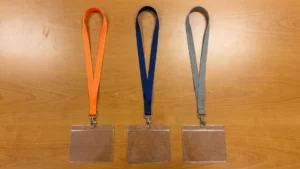
Providing the exact same lanyard to every person at a conference often leads to discomfort and broken attachments. A lightweight strap that perfectly supports a simple visitor name badge may snap or twist when a staff member uses it to carry multiple keys and a heavy plastic credential. Planning your procurement around specific use cases prevents these practical failures during the event. Lanyard & Keyhanger provides these educational resources to help event organisers evaluate different carrying needs rather than ordering a single bulk design.
How to map your attendee groups and their carrying needs
Categorising your conference attendees based on their roles gives your team a clear process for matching lanyard features to actual requirements. You can evaluate visitors, speakers, and operational staff to understand exactly what each group will wear and how long they will wear it. This preparation ensures accurate procurement and prevents you from paying for heavy-duty attachments that standard visitors never use.
- Visitors: Standard attendees typically carry a lightweight paper badge for visible identification and only wear the strap for a few hours.
- Speakers and VIPs: These individuals often need to display a name badge alongside a heavier plastic access pass for restricted areas.
- Event staff: Operational teams carry multiple heavy items such as keys, mobile devices, and access credentials that require durable keyhangers.
Choosing materials and widths for lightweight paper badges
Visitors carrying simple paper badges need a lanyard setup that provides visible identification without adding unnecessary weight around the neck. You can prioritise comfort and cost-effectiveness by selecting thin, flexible materials and simple hardware designed specifically for light use. Matching these elements to the short duration of a conference keeps the overall strap unobtrusive and easy to wear.
Recommended materials for comfort
Soft polyester and organic cotton offer excellent comfort for attendees wearing lightweight paper credentials. Polyester absorbs very little moisture and resists wrinkling, which makes it a highly durable and budget-friendly choice for multi-day events. Organic cotton provides a naturally breathable and soft texture that works well for sensitive skin during long conference sessions.
Suitable widths for basic identification
A standard event identification lanyard generally measures between 10 millimetres and 15 millimetres in width. A 10-millimetre strap offers a minimalist design that supports a simple paper tag without adding bulk. A 15-millimetre width remains the most popular choice for conferences because it easily accommodates a clean, single-line printed logo while keeping the fabric light.
Best attachments for simple badges
The attachment connects the lanyard strap directly to the lightweight paper badge holder. No-twist clips and swivel hooks are highly recommended because they prevent the credential from flipping backwards during movement or wind. These simple connectors ensure the attendee’s name remains visible at all times without requiring heavy metal carabiners.
Upgrading the setup for heavy access cards and plastic passes
Speakers and venue contractors frequently carry thick plastic credentials or clamshell Radio Frequency Identification (RFID) badges that demand stronger hardware. A visible name badge does not provide access authorisation unless a separate access-control process supports it, meaning these individuals must carry physical cards to enter restricted areas. These heavier passes place continuous mechanical stress on standard clips, which can cause cheap plastic hooks to snap or thin metal springs to bend. Upgrading to a solid trigger snap or a swivel hook made from zinc alloy ensures the attachment handles the weight securely.
While a standard 15-millimetre strap easily holds a normal plastic card, combining multiple thick passes often requires a wider fabric choice. Moving to a 20-millimetre or 25-millimetre lanyard provides more surface area, which prevents the strap from twisting or digging uncomfortably into the wearer’s neck. This wider design also gives your team more space to print detailed graphics or prominent security branding for restricted areas. Accommodating these heavier setups prevents the reader from ordering thin straps that ultimately fail under the weight of professional access tools.
Selecting strong keyhangers for staff with keys and devices
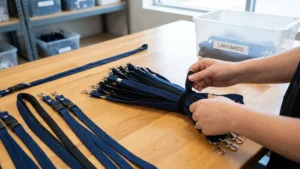
Operational staff who carry multiple heavy items require a dedicated keyhanger rather than a standard promotional lanyard. Distinguishing the strap material and its structural attachments from a basic visitor badge cord ensures workplace durability. You can equip these teams with heavy-duty components that handle constant pulling, snagging, and weight transfer throughout the day.
Thicker woven or tubular straps
A tubular strap features a hollow, curved architecture that naturally absorbs dynamic shock loads when staff carry heavy tools or large sets of keys. This built-in elasticity prevents the fabric from snapping abruptly when the keyhanger catches on a desk or door. Alternatively, thick flat woven straps distribute force rigidly across a wider plane, which provides a comfortable, low-profile fit for everyday wear.
Heavy duty split rings
Standard clips often fail when forced to hold thick keys, making a heavy-duty split ring the most reliable attachment for operational teams. These rings use a double-loop coil design that maintains high spring memory, ensuring the metal snaps fully closed after a key is twisted onto it. Selecting rings made from spring-tempered steel or stainless steel protects the keyhanger against rust and structural bending over time.
Detachable buckles for quick access
A detachable buckle allows the lower section of the keyhanger to be removed without taking the entire strap off over the head. This mechanism provides immediate convenience for staff who need to frequently unlock doors or hand a device to a colleague. Because the buckle adds extra weight and introduces another connection point, it should only be included when it directly improves the user’s daily tasks.
Assessing when to include a safety breakaway connection
A safety breakaway is a plastic connection designed to pull apart when the lanyard strap is subjected to sufficient force. Organisers often include this feature for active staff moving through crowded event spaces or working near temporary structures. The breakaway mechanism can help reduce the risk of snagging when attendees navigate busy corridors or transport equipment.
While a breakaway connection provides an additional level of release, it does not completely eliminate strangulation, entanglement, or workplace risk. You must still conduct a proper safety assessment of the complete product and the specific event environment before authorising its use. A safety breakaway does not automatically make a lanyard universally suitable for active machinery, sport, or healthcare settings without further evaluation.
Managing the distribution process at the conference venue
Handing out different lanyard setups requires a structured plan at the registration desk to keep attendee flow moving efficiently. Sorting the physical credentials in advance saves time and gives your staff a consistent distribution process on the day of the event. You can guide your team through a clear sequence to ensure every person receives the correct badge holder and attachment.
- Sorting by role: Separate the lightweight visitor lanyards from the heavy-duty keyhangers intended for staff and VIPs before the doors open.
- Attaching the credentials: Have your team attach the pre-printed paper badges to the swivel hooks, ensuring the printed side faces outward.
- Distributing to attendees: Hand the completed identification directly to the attendee, confirming that their specific role matches the provided strap and access card.
Ordering the right quantities for your planned groups
Calculating the correct total numbers for your mapped groups ensures careful preparation without massive overspending on unnecessary extras. You should estimate the required amount for visitors, speakers, and staff separately, and then add a sensible reserve for replacements or misplaced items. This precise approach guarantees your registration desk has enough identification supplies on hand while keeping the overall procurement budget fully controlled.
Which lanyard materials are most comfortable for paper badges?
Soft cotton, soft polyester, and smooth nylon feel comfortable with lightweight paper badges. They are light, skin friendly, and do not dig into the neck. Choose a narrow 3/8 to 5/8 inch strap to reduce bulk. Pair it with a swivel hook, a rotating metal hook that limits twisting.
How can I stop lightweight badges from flipping or turning?
Choose a no twist clip or a swivel hook so the holder can rotate freely. A no twist clip is an attachment that keeps the badge facing forward during movement. Use a fitted badge holder rather than an oversized sleeve. Keep strap at the standard 36 inch length for balance.
What setup works for heavy access cards or multiple plastic passes?
Use a wider 3/4 to 1 inch strap for thick passes or several plastic cards. Fit a metal lobster claw, a spring loaded swivel hook that resists twisting. Add a badge reel, a retractable cord, to present cards without removing the lanyard. Avoid overloading flat spring bulldog clips.
What attachment should I use if people carry keys or small devices?
Choose a split ring for keys. A split ring is a coiled metal ring that snaps closed after twisting open. Add a detachable buckle so users can release keys without removing the lanyard. For heavier sets, pair a metal swivel hook with the ring to reduce twisting and wear.
Do I need a safety breakaway, and what are the trade offs?
A safety breakaway can help reduce risk by releasing when the lanyard is pulled sharply. It is useful in crowded venues, schools, and active areas where snagging is possible. It adds another connection that can wear, so keep spares for replacements. Complete a safety assessment for the venue and use.