Assessing what your lanyards need to display
Every successful lanyard project begins with a clear understanding of its daily function rather than its visual design. A wide strap may offer excellent visibility for a large promotional logo, but it can become heavy and uncomfortable if the wearer only needs to hold a lightweight visitor pass. Conversely, staff members who carry multiple keys or heavy access cards require a sturdy base that can support the weight without digging into their neck. By defining exactly what the lanyard or keyhanger must hold during an average day, you can establish a practical foundation that makes subsequent choices about fabrics and printing much easier.
Understanding common lanyard strap materials
The base fabric of your lanyard dictates both user comfort and how well your chosen design will appear in the final product. Selecting the appropriate material requires you to balance the physical texture against the demands of the workplace or event. Understanding the core differences between synthetic fibres will help you provide a comfortable experience for the wearer.
Standard polyester fabrics
Standard polyester provides a reliable and cost-effective option for many everyday identification needs. Manufacturers create these straps using a woven grid of fibres, and a higher weave density creates a tighter structure that increases overall durability and load capacity. This dense construction resists fraying and helps distribute the weight of heavier badge holders evenly across the strap. The slightly textured surface handles standard daily wear well, making it a common choice for conferences and general office environments.
Recycled polyester alternatives
When your organisation wants to utilise repurposed materials, recycled polyester, often called rPET recycled polyethylene terephthalate, offers the same physical performance as standard synthetic fibres. Processing facilities create this material by collecting used plastic bottles, washing them, and shredding the plastic into tiny flakes. These flakes are melted down and extruded into continuous filaments, which are then spun into strong yarn. Industrial looms weave this yarn into durable straps that perform exactly like virgin polyester, providing a functional alternative that repurposes existing plastic waste.
Nylon for smooth textures
Nylon stands out in environments where wearers need maximum comfort during long shifts. The molecular structure of nylon allows for continuous filament extrusion, which produces a naturally silky and highly uniform surface with low friction. This sleek texture prevents chafing against the skin, making it an excellent choice for industrial settings or active roles where the strap moves constantly. While it feels soft to the touch, nylon maintains exceptional tensile strength to safely support heavy tools or secure identification cards without stretching.
Using screen printing for solid colours
Screen printing remains one of the most reliable methods for applying clear and distinct branding to lanyard straps. During this process, a technician or machine uses a squeegee to press liquid ink through a fine mesh screen directly onto the fabric surface. Each individual colour in your design requires its own dedicated screen and a separate layer of ink. The printed strap then passes through a heat dryer, which cures the ink so it bonds firmly with the material and resists flaking during daily use.
Because each colour is applied independently, this technique works best for designs that feature solid colours and simple typography. Screen printing cannot easily blend wet inks to create photographic fades or complex gradients, as the liquid dots tend to blur together on the textile fibres. You will achieve the best results by keeping your artwork straightforward and limiting your palette to a few strong, contrasting colours. This approach sets realistic expectations for the final product and ensures your branding remains highly legible from a distance.
Achieving edge to edge artwork with dye sublimation
Dye sublimation offers a powerful alternative when your branding requires intricate details, photographic elements, or a continuous background pattern. This method relies on a physical phase change where specialized solid dyes are printed onto transfer paper and placed face-down on a synthetic polyester strap. When subjected to high temperatures in a heat press, the solid ink turns directly into a gas without passing through a liquid stage. The intense heat simultaneously opens the microscopic pores of the polyester fibres, allowing the gaseous dye to penetrate deep into the fabric.
As the material cools, the fibres close and permanently trap the dye inside their core structure. Because the ink becomes part of the cloth rather than sitting on top as a surface layer, the design will not crack, peel, or scratch off over time. This internal bonding process allows printers to apply colour all the way to the very edges of the strap without the ink pooling or bleeding at the borders. For marketing teams seeking vibrant, full-colour graphics that cover the entire surface of the lanyard, dye sublimation delivers unmatched clarity and flexibility.
Weaving your logo directly into the strap
Woven lanyards build your brand identity directly into the physical structure of the strap instead of applying ink to the surface. Modern Jacquard weaving machines translate your digital logo files into precise instructions, raising and lowering individual lengthwise warp threads as the crosswise yarns pass through. By contrasting different weave structures, the machine exposes or hides specific thread colours to form your text and graphics. This integrated construction produces an incredibly durable product where the design cannot wash away or wear off, making it ideal for robust environments.
While woven designs offer excellent longevity and a classic, textured appearance, the physical interlacing of threads imposes strict limits on visual detail. You cannot achieve smooth colour gradients because the transition between shades relies on mechanical, pixel-like steps of different yarns. Trying to blend contrasting colours often results in a muddy appearance, and highly intricate logos can lose their sharpness. To get the best results, you must simplify your artwork into bold shapes and solid colours that translate clearly into the woven format.
How material texture affects ink and detail
The interaction between your chosen fabric and the branding technique determines the final clarity of your design. Understanding how different textures absorb or repel colour helps you avoid incompatible combinations that compromise your visual identity. Evaluating these material factors early in the process prevents costly printing errors and ensures your text remains highly legible.
Screen printing on standard polyester
Standard polyester features a relatively low-energy, non-porous surface that prevents liquid screen-printing inks from absorbing deeply. Instead, the ink relies on a flat surface interface and mechanical bonding to adhere properly to the strap. A slight micro-roughness in the weave provides tiny physical hooks for the ink to grip, ensuring a secure hold. However, if the polyester is too deeply ribbed or highly textured, the uneven surface can prevent the printing screen from making uniform contact, which may cause the ink to pool or blur the edges of your logo.
Dye sublimation on smooth fabrics
Dye sublimation requires a smooth, flat surface to achieve the sharpest possible image transfer. When the fabric lacks heavy bumps or deep weave gaps, the heat press makes complete and consistent contact across the entire area of the strap. This uniform pressure ensures that the gaseous ink sinks directly into the flat fibres without bleeding into empty spaces or distorting fine lines. Using a smooth polyester or microfibre base reflects light evenly, which keeps your photographic details crisp and your background colours vibrant.
Matching thread colours for woven designs
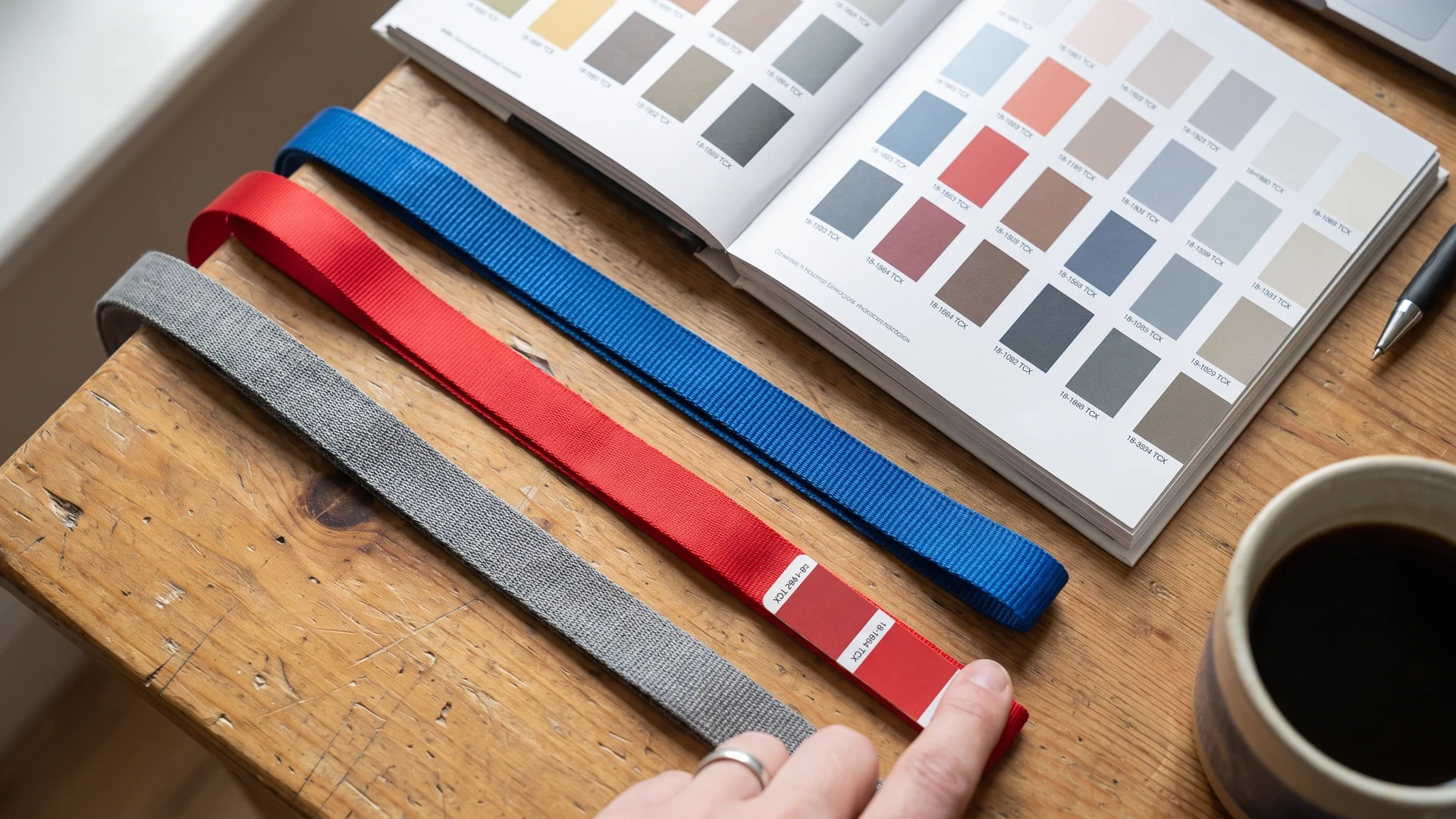
Translating your corporate brand colours into a woven lanyard requires matching specific thread dyes to standardized colour references. Manufacturers typically cross-reference textile-specific Pantone codes with their inventory of stock threads to find the closest physical match. Because woven structures alter how light reflects off the finished strap, a digital screen cannot accurately represent the final appearance of the yarn. For precise brand requirements, producers may create custom dye baths and physical swatches, known as lab dips, to verify the exact colour under standardized lighting before production begins.
Steps to prepare your brand elements for production
Adapting a full corporate logo for a narrow strap requires careful planning to ensure the final product remains legible. Following a structured preparation process helps your team hand over practical, print-ready files to the manufacturer. Taking these steps in advance simplifies the production phase and guarantees a more professional outcome.
- Simplify the design: Remove intricate background elements, fine taglines, and complex drop shadows from your logo. A clean, streamlined version of your brand mark scales down much more effectively to fit within a narrow printable area. This simplification guarantees that your core identity remains recognizable even from a distance.
- Select solid colours: Convert any digital gradients or transparent layers into solid colour blocks. This step is particularly important if you plan to use screen printing or woven techniques, as these methods rely on distinct hues rather than blended shades. Flat colours always reproduce with greater accuracy across different textile manufacturing processes.
- Verify the dimensions: Check the exact width of your chosen lanyard or keyhanger and ensure your text height leaves a comfortable margin on the top and bottom. Pushing artwork too close to the edge of the strap can result in cropped letters during the manufacturing process. A generous border creates a balanced visual layout and accommodates slight shifts in the fabric during printing.
- Provide accurate references: Supply your manufacturer with standardized textile colour codes rather than relying on digital screen approximations. Giving precise references helps the production team match their inks or thread dyes closely to your established brand guidelines. This attention to detail prevents unexpected colour variations and ensures consistency across all your branded materials.
Finalising your lanyard branding and attachments
A beautifully printed strap only fulfils its purpose when paired with the right functional hardware. You must match the visual design to a suitable attachment, such as a swivel hook for a clear badge holder or a split ring for heavy keys. Depending on the environment, you should also consider integrating a safety breakaway, which releases under tension to reduce entanglement risks, though this requires a proper safety assessment of your specific workplace. By connecting your branding choices back to these practical components, Lanyard & Keyhanger helps you create a complete identification tool that serves your users reliably every day.
Which lanyard material gives the sharpest screen printed logos?
Nylon often delivers crisp screen prints because its surface is very smooth. Polyester and recycled polyester also print well and are common at events. On dark straps, use high opacity inks and a white underbase that blocks dye migration. Keep fine text slightly larger to resist bleed.
When should I choose dye sublimation for lanyards?
Pick dye sublimation when you need full colour, gradients meaning smooth colour fades, or edge to edge artwork on polyester. The dye bonds inside the fibres, so details and colour stay sharp. Use smooth 100 percent polyester for best clarity. Avoid it on cotton or low polyester blends.
Can I print edge to edge on nylon or blended straps?
Edge to edge, or full bleed, is reliable on polyester via dye sublimation. Nylon typically uses screen printing, which sits on the surface and leaves margins. For nylon or blends, plan artwork with safe edges or switch to a polyester strap for all-over coverage. Confirm strap construction before layout.
Are woven logos better than printed lanyards for detail and colour matching?
Woven logos are highly durable because the design is built from yarns. They handle small text well on fine weaves, but complex photos or smooth colour gradients are limited. Colour uses available thread shades or custom dyed yarn, so exact Pantone colour references may need approximation.
Does recycled polyester print like standard polyester and how should I describe it?
Yes, recycled polyester generally prints like standard polyester because the fibre chemistry is the same. It is made from recycled polyethylene terephthalate bottles that are cleaned, melted, and spun into yarn. Describe the recycled content, not broad environmental claims. Confirm the percentage with your supplier.